A gold price alert notifies you automatically as soon as the gold price reaches your target level. You no longer have to keep checking the current gold price, yet you still catch important price movements. In this article, you'll learn about three useful alerts: a price level, a percentage alert and an alert at the 200-day moving average. You'll also find out which mistakes to avoid so your alert triggers neither too often nor too rarely.
What is a gold price alert?
Definition and how it works
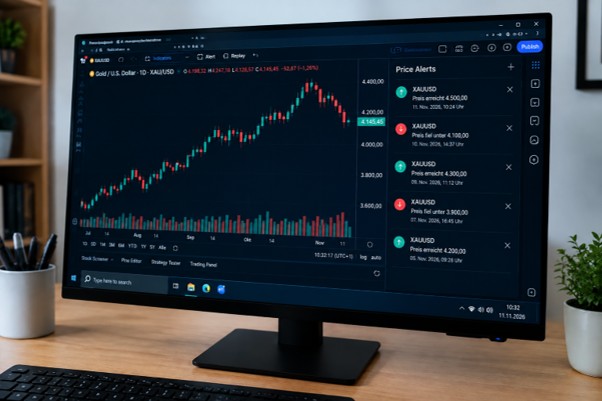
A gold price alert is an automatic notification that you set up yourself. You define a condition, for example: "Gold rises above $4,500 per troy ounce" or "The gold price falls by 3% within 5 days." An app like Wavealert then checks the gold price against your condition every 10 minutes. As soon as the condition is met, you receive an email. Until then, you don't have to do anything and can focus on other things.
Benefits of a gold price alert
A gold price alert gives you three advantages. You save time because you no longer need to check the gold price several times a day. You react more calmly because your rules are set before the price starts to swing. And you learn about important price levels promptly, whether you're at work or on the go. That way, you make decisions according to plan rather than on gut feeling.
Difference from automatic purchases
A gold price alert doesn't buy or sell anything. It doesn't execute any transactions and doesn't touch your brokerage account. It's a signal, nothing more. After receiving the notification, you decide for yourself whether to act, for example with physical gold, an ETC or another security, or whether to wait. That's exactly what sets an alert apart from an automatic buy or sell order.
Why an alert for gold is worth it
More discipline in buying decisions
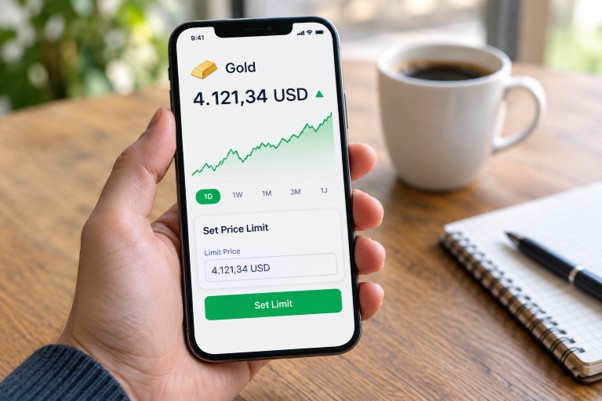
The gold market often fluctuates strongly, especially in turbulent times. That's when many people give in to panic or euphoria and decide on gut feeling. A gold price alert helps you avoid this. You set your rules while you're calm, for example a price level and a note on what you'll do when it triggers. When the notification arrives, you follow your plan instead of reacting to every short-term fluctuation.
Saving time through automation
A gold price alert saves time because the software monitors the gold price for you and only notifies you when something relevant happens. Without an alert, you check prices, charts and news manually several times a day. With an alert, you define once at which price, at which percentage change or at which trend signal you want to be informed. After that, the system checks the gold price automatically, and you can get on with your work.
Don't miss major price moves
Gold reacts sensitively to global factors such as interest rates, the US dollar and political tensions. As a result, the gold price can change significantly within just a few days. With a well-configured gold price alert, you learn about such moves promptly, even when you're not in front of a chart. You can then decide calmly whether a price dip is interesting for you. An alert doesn't protect your assets. It simply makes sure you get the information in time.
What moves the gold price
Impact of interest rates and bonds
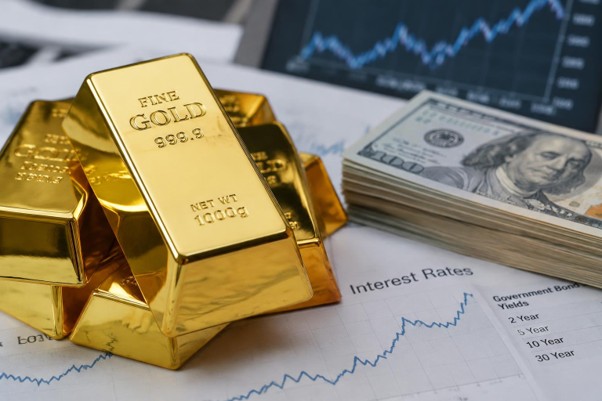
Rising interest rates often weigh on the gold price because gold pays no interest, which makes fixed-income investments more attractive. Real interest rates, meaning interest rates minus inflation, are especially important. Government bond yields and the general interest rate level are therefore considered key drivers of the gold price. When real interest rates fall, bonds become less attractive as a competitor, and gold tends to become more interesting for investors.
The role of the US dollar
A strong US dollar often weighs on the gold price, while a weak one usually supports it. The reason: gold is traded worldwide in US dollars. When the dollar rises, gold becomes more expensive for buyers in other currency areas, and demand can fall. If you live outside the US, the exchange rate between your currency and the dollar also matters. It determines how the gold price develops in your currency, even if the price per troy ounce in dollars stays the same. The app shows the price in US dollars; the value in your own currency is additionally affected by the exchange rate.
Inflation and geopolitical crises
High inflation and political crises often support the gold price because many investors see gold as a safe haven. Those who want to protect their capital from loss of purchasing power or uncertainty increasingly turn to physical gold. This higher demand can push the gold price up noticeably. At the same time, the price often moves quickly during such phases. A gold price alert with a price level notifies you as soon as the gold price reaches your mark. That way, you keep an eye on the price without checking it constantly.
The three most important alert types
Price level (absolute alert)
With a price level, you set a fixed gold price at which you want to be notified. For example, the alert notifies you as soon as gold rises above $4,500 per troy ounce or falls below $4,100. This works well if you have a clear buy or sell target in the gold market. The alert won't stop you from misjudging the market, but you won't miss the level you've set for yourself.
Percentage alert over a period (delta alert)
A percentage alert notifies you when the gold price rises or falls by a certain percentage within a set period, for example by 3% within 5 days. This lets you spot fast moves even if you don't have a fixed target price. Such swings are often triggered by news about inflation, interest rates or the US dollar. Start with a percentage that the gold price doesn't reach every week.
Alert at the 200-day moving average
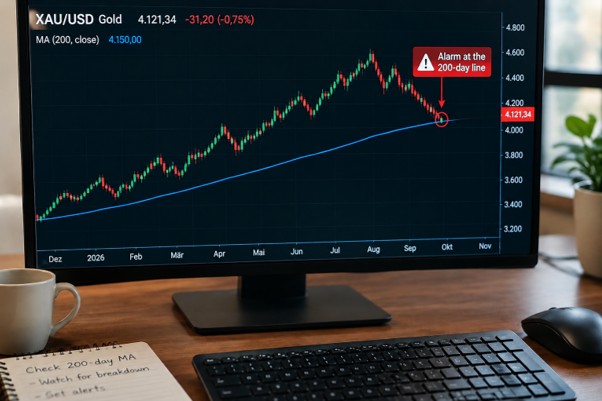
The 200-day moving average is the average gold price over the last 200 trading days and is considered an important trend filter. If the gold price falls below or rises above this line, it can point to a trend reversal. An alert at the 200-day moving average notifies you at exactly that moment. Keep in mind that the line can also produce false signals in sideways markets. It's an indication, not a forecast.
How to set up your gold price alert
Choose the alert type and write a strategy note
Before you create your gold price alert, you need two things so you don't act on gut feeling when the notification arrives:
- Choose the alert type: price level, percentage alert or 200-day moving average.
- Save a short note on what you'll do when it triggers, for example: "At $4,100, I'll check the news and buy no more than 10% of my planned amount."
That way, you make decisions according to plan when the gold price rises or falls.
Test and adjust your alert
- Briefly test each alert before relying on it. To do this, set a test alert just above the current gold price. Since prices are updated every 10 minutes, the notification may take a few minutes. If the email arrives, the alert works.
- Review your alerts regularly and adjust the thresholds if an alert triggers too often or too rarely. That way, you keep track of the gold price and your portfolio without watching charts all day.
Common mistakes with gold price alerts
Too many active alerts
If you set up too many gold price notifications, important signals can get lost in the flood of messages. So don't overload your portfolio with too many rules. When it comes to commodities and precious metals, they confuse more than they help.
Thresholds that are too tight
Thresholds that are too tight are a common mistake because the alert then triggers constantly, and at some point you start ignoring it. The gold price fluctuates every day; that's normal. An alert that fires at small moves therefore produces lots of false alarms and no real value. Set your price level so that it's worth a decision, and your percentage alert so that it doesn't trigger every week. If your alert still fires too often, increase the distance from the current price.
Missing notes and confusing rules
Without a note, you often no longer know why you set up an alert when it triggers. You then quickly lose track of the gold price per troy ounce and make gut decisions in turbulent phases. So write one sentence for each alert that states what you'll do when it triggers. For example: "At $4,100, I'll check the news and buy no more than 10% of my planned amount." With Wavealert, your note appears directly in the alert email, so your plan is right in front of you. A clear strategy for your portfolio helps you make decisions on gold or silver according to plan rather than out of panic or euphoria.
Conclusion
A gold price alert gives you an overview without having to constantly check the price. Combine a price level, a percentage alert and an alert at the 200-day moving average, or start with one alert and add another if needed. Write a clear note for each alert on what you'll do when it triggers, and keep the number of rules small. That way, you respond to market moves instead of chasing them.
With Wavealert, you can set price levels, percentage alerts and signals at the 50-day or 200-day moving average for gold and silver. When an alert triggers, you receive an email with your note. You can also track your physical holdings there.
Sign up for Wavealert for free and create your first gold price alert.
Note: This article is for informational purposes only and does not constitute investment advice. Prices and market conditions change constantly. An alert does not protect any investment and does not guarantee a profit.
Register for free and create alerts and notes tailored to your strategy.
Learn more about our fair pricing under Pricing.